Starting a blog when you have no idea what to write about
October 28, 2026 · Getting Online · David Semones
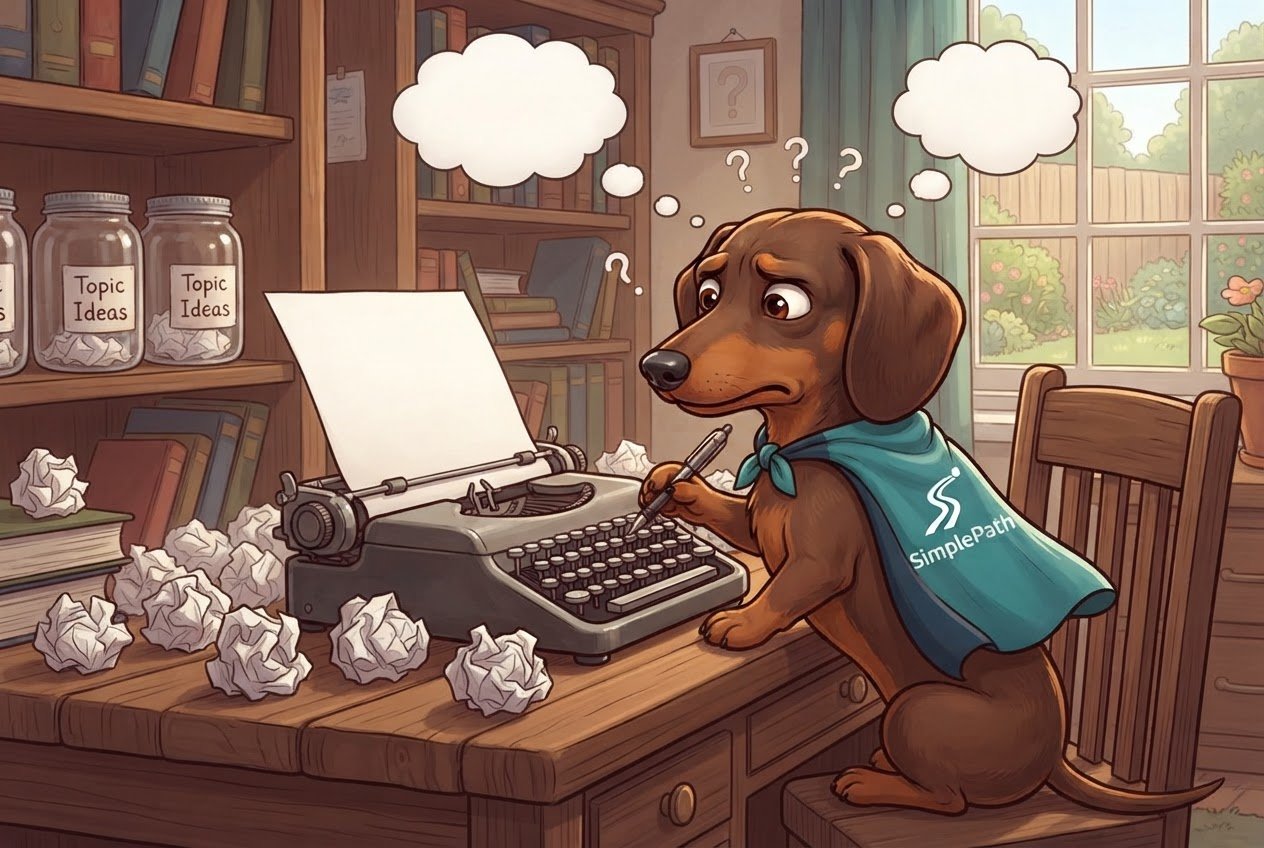
If you have no idea what to write about, write down the questions people already ask you and answer them one at a time. That's really all a blog is: a collection of answers to specific questions, from someone who knows the subject. You don't need a big theme or a clever angle before you begin. You need a short list of real questions and the patience to answer the first one well.
Where do blog ideas come from when you're starting from zero?
They come from three places you already have access to.
- Questions people ask you. Customers, friends, coworkers, relatives. If someone has asked you the same thing more than twice, that's a post.
- Things you had to figure out the hard way. The mistake you made in your first year, the tool you wish you'd skipped, the thing nobody explained. Beginners are searching for exactly this.
- What you'd tell a friend starting out. Imagine a friend is about to do what you do. What would you say over coffee? Write that down, in the order you'd say it.
Most people stall because they're hunting for something impressive. Skip that. Useful beats impressive, and useful is usually boring and specific: how long something takes, what it costs you to find out, what to check before you buy.
How do you know your topic is big enough to blog about?
Use the ten-question test. Set a timer for 20 minutes and write down every question someone could plausibly ask about your subject. Don't judge them. Just list.
- You reach ten easily: you have enough to start. Pick the question you hear most often and begin there.
- You get stuck around five: your topic is probably too narrow. Zoom out one level. "Repotting orchids" becomes "caring for houseplants."
- You get fifty and can't choose: your topic is too wide. Zoom in on one type of reader. "Personal finance" becomes "money basics for people starting their first job."
You're also allowed to be wrong. Nothing stops you from changing the topic after ten posts. Your first few posts are how you find out what you enjoy writing and what people actually read.
What should the first post actually look like?
Pick one question from your list and make it the title, in plain words. Then answer it in the first two sentences, before any backstory. Spend the rest of the post explaining how you got to that answer, with real steps, numbers or examples.
This isn't only good manners. It's also how people find you. You'll hear the term SEO, which just means making it easy for search engines like Google to understand what your page is about and show it to the right person. Search engines, and now AI assistants that answer questions in chat, both look for pages that state a clear answer to a specific question. A post titled with a real question and answered directly is exactly what they're looking for. You don't need tricks. You need clarity.
A simple shape for any post:
- A title that is the question, or close to it.
- A one or two sentence answer right at the top.
- Two to four short sections that explain the answer, each with its own plain heading.
- A last line that tells the reader what to do next.
Aim for somewhere between 600 and 1,000 words. Shorter is fine if the answer is short. Don't stretch it to hit a number.
Do you need to know how to build a website first?
No. This is the part that keeps a lot of people from starting, so it's worth being plain about it. You don't need to learn HTML (the code that structures a web page) or CSS (the code that controls how it looks). Those are the behind-the-scenes pieces, and you can get a blog running without touching either.
With SimplePath, you build a website by describing it in your own words, the way you'd explain it to a person. You can see the kinds of things it can build, including blogs, on the what SimplePath can build page. If you're wondering about cost before you commit to anything, the pricing page lays out what each plan includes.
Already have a site and not sure it's pulling its weight? The free website grader scores it, which gives you a starting point before you add a blog.
A simple plan for your first month
- Day one: run the ten-question test and save the list.
- Week one: write your first post, answering the question you hear most.
- Weeks two to four: write one more post a week from the same list. Reread each one and ask, "Would this have helped me when I started?"
Consistency matters more than volume. One useful post a week for a month gives you four real answers on the internet, which is four more than most people who are still waiting for a perfect idea.
Your next step is small: open a note and spend 20 minutes on that question list. When you're ready to put it online, take a look at what SimplePath can build, or if you have a question first, the frequently asked questions and the contact page are there to help.
Drafted with SimplePath's own AI blog, then updated and published by David before it went up. It's the same tool included with the Grow plan. See how it works.