Video testimonials versus written reviews
November 6, 2026 · Winning Customers · David Semones
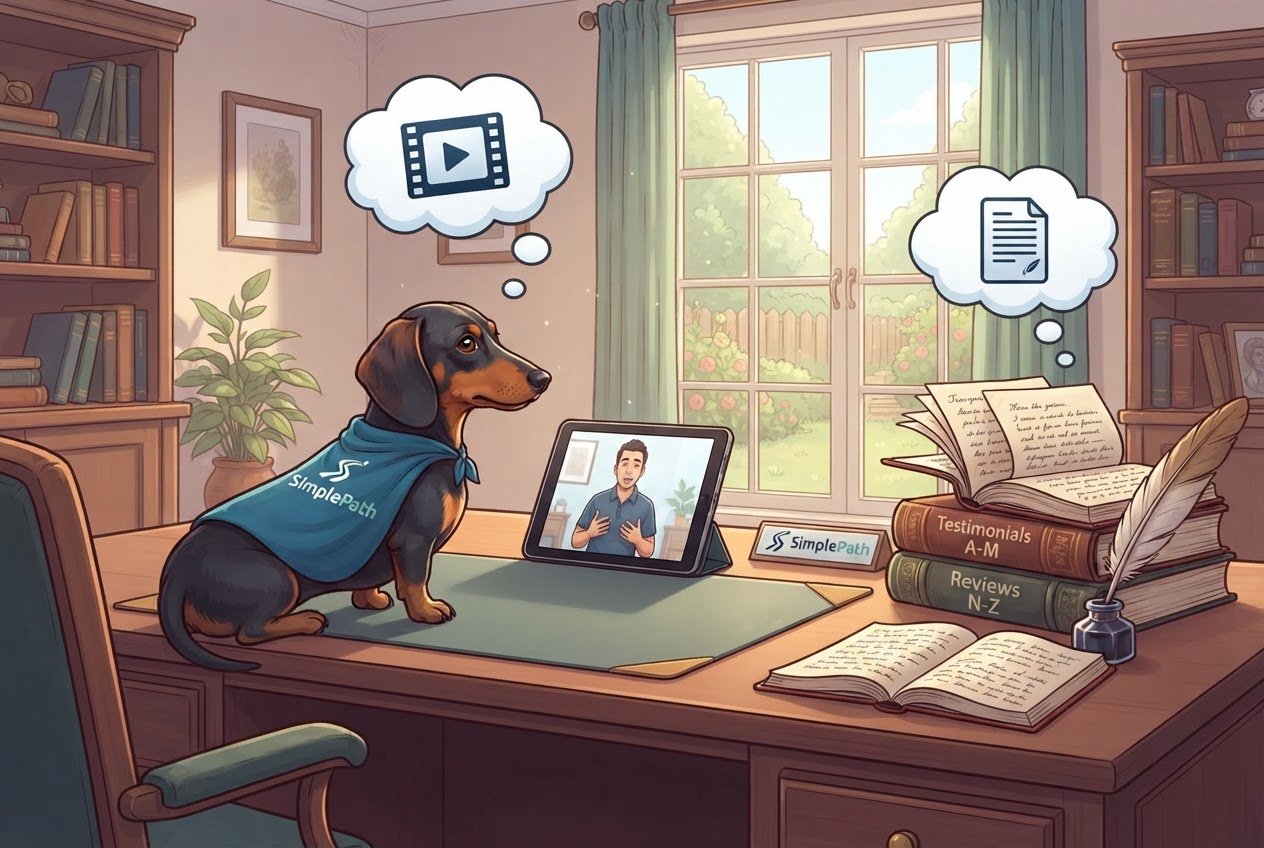
Neither one wins outright, but if you can only do one first, start with written reviews. They're easier to collect, easier for people to skim, and they're text that Google and AI assistants can read directly. Video testimonials are the better closer: they build more trust per customer, so they belong on the pages where someone is deciding whether to hire you.
Here's how to tell which one fits a given moment, and how to use both without making it a second job.
When written reviews work better
Written reviews win on reach and on volume. A customer can write three sentences on their phone in a minute. Asking for a video, by comparison, means asking them to find good light, talk to a camera, and feel comfortable doing it. Many happy customers will say yes to the first and politely dodge the second.
Text also has a quiet advantage when it comes to being found online. Search engines (the tools like Google that decide which sites to show for a search) work by reading the words on a page. A written review that says "they fixed our leaking roof in one day and cleaned up afterward" gives them real words to read, including the very things future customers will search for. Video is harder for them to understand unless you add a written version of what's said in it. AI assistants that answer questions by pulling from web pages work much the same way: they quote what they can read.
Written reviews are also quick to scan. Someone comparing three businesses doesn't want to sit through three two-minute videos. They want to skim ten reviews in thirty seconds and spot a pattern, like "on time" showing up again and again.
Use written reviews when:
- You want a steady stream of proof without chasing people.
- You want specific details on your site, like the service, the town, or the result.
- Your visitors are likely to skim and compare.
When video testimonials work better
Video wins on trust. A face and a voice are hard to fake, and viewers pick up on tone in a way text can't deliver. When a customer says "I was nervous about hiring someone, and this went better than I expected," you can see they mean it. That's a lot harder to get across in a typed sentence, and written reviews are easier to doubt because people know they can be made up.
Video is strongest when the purchase feels like a bigger decision: something costly, personal, or hard to undo. Think remodeling, coaching, a wedding photographer, a financial advisor, or any service where the buyer is thinking "can I trust this person?" It also works well when the customer's story has a before and after, because you can show it rather than describe it.
The rule for deciding is simple. If the visitor's main worry is "is this business real and good?", add a video. If their main worry is "does this business do what I need?", written reviews with specific details answer that faster.
How to use both on your website
You don't have to pick. A practical setup looks like this:
- Collect written reviews all the time. Ask every customer right after the job is done, while they're still pleased. Make it one easy request with one link. Don't ask for a novel; ask what they hired you for and how it went.
- Pick two or three customers for video. Choose the ones who were clearly delighted and are comfortable talking. Ask them to answer three questions: what was the problem, why did they choose you, and what changed afterward. A phone held steady is fine. Short and honest beats polished.
- Put the video where the decision happens. That's usually your home page, your main service page, or the page where people contact you. Not buried on a page called "Testimonials" that few people visit.
- Write out what's said in the video. Add a short written version underneath, or a few pull quotes. This helps visitors who can't play sound, and it gives search engines and AI assistants words to read.
- Spread written reviews across the site. Put a relevant one next to each service rather than saving them all for one page.
Keep real names and details where customers allow it. "Great service!" from nobody in particular carries very little weight. "Maria R. in Tampa" saying her kitchen was finished on schedule carries much more. Only publish what people have agreed to, and never write or edit a review to say something the customer didn't.
If you're building or rebuilding a site and want somewhere to put all of this, SimplePath is an AI-led website builder where you describe the site you want and it builds it for you. You can see what SimplePath can build, from business sites to stores and blogs, and then decide where reviews and videos fit. Already have a site? The free website grader will score it, which is a handy way to see whether your pages are set up well for visitors and search.
The short version and your next step
Start with written reviews because they're easy and they get read by both people and machines. Add two or three short videos to the pages where trust matters most. Together they cover what each one misses.
This week, send your last five happy customers a simple request for a few written sentences, and ask one of them if they'd be up for a quick video. If you'd like help getting a site ready to show it all off, get in touch and we'll point you in the right direction.
Drafted with SimplePath's own AI blog, then updated and published by David before it went up. It's the same tool included with the Grow plan. See how it works.