

The difference between a blog and a business website
November 21, 2026 · Getting Online · David Semones
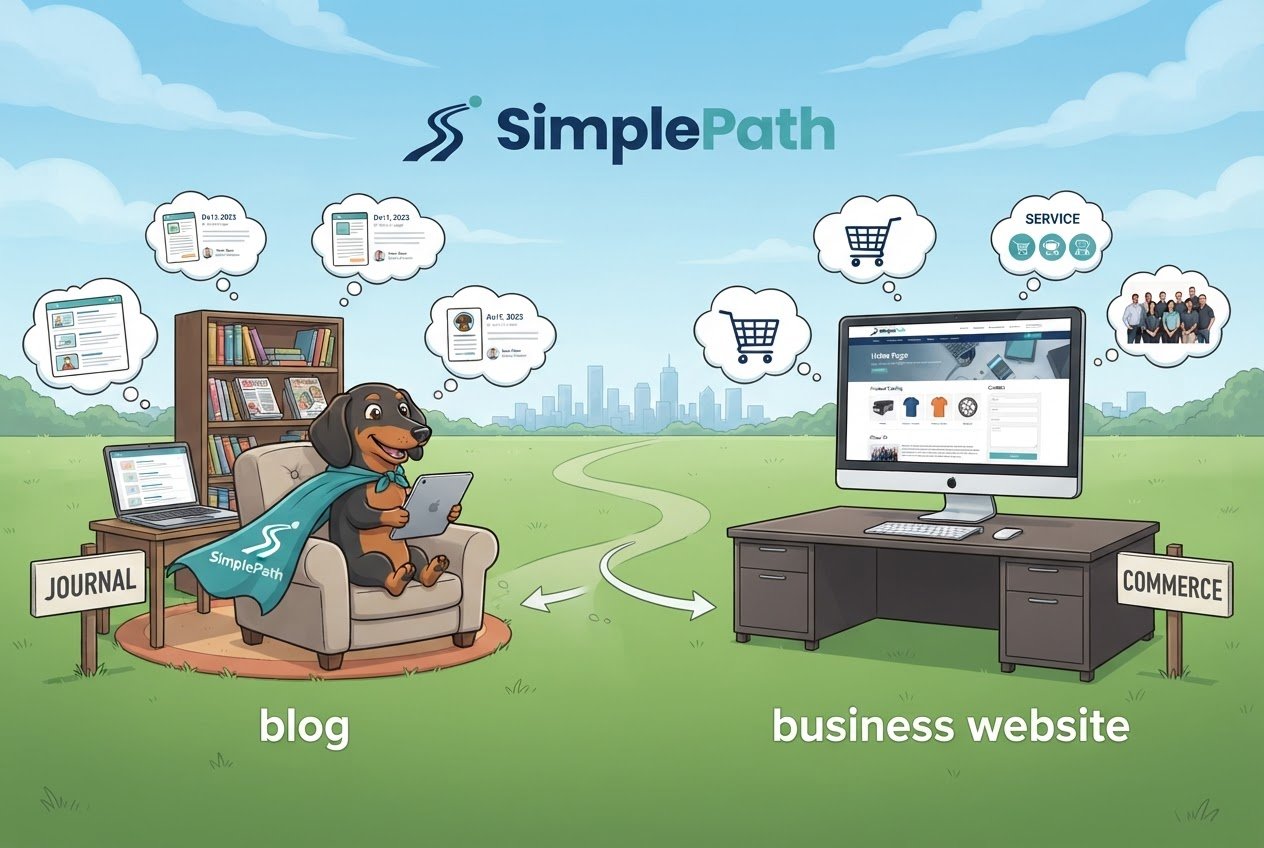
A blog is a website organised around posts you publish over time, newest first. A business website is organised around your business: what you sell, who it's for, what it costs and how to get in touch. If you're trying to win customers, you need the business website first. A blog is something you can add to it later.
That's the short version. Here's what it means in practice, and how to decide where to start.
What a blog is built to do
A blog is a running series of articles. Each one is a separate page about one topic, and the homepage usually shows the latest few. People land on a blog post because they searched for something specific, like "how do I price a wedding cake" or "what does a plumber check in an old house".
That makes a blog good at three jobs:
- Being found. Every post is another page that can show up in search results, and another chance for an AI assistant to quote you.
- Showing you know your stuff. A reader who has learned something useful from you is more likely to trust you.
- Staying fresh. New posts give people a reason to come back, and give search engines a sign the site is active.
What a blog doesn't do well on its own is turn a visitor into a customer. Posts answer questions. They don't usually lay out your services, your prices or a clear way to hire you. And a blog needs a steady supply of new writing to work. One that stops updating looks abandoned.
What a business website is built to do
A business website is closer to a shopfront with a good sign out front. It has a small number of pages that rarely change, and each has a job:
- A homepage that says in a sentence or two what you do and who for.
- A page for each main service or product.
- Pricing, or at least a clear idea of what things cost.
- An About page, so people know who they're dealing with.
- A contact page or form, so people can reach you without hunting.
Someone who lands here is usually closer to a decision. They're checking whether you're real, whether you do what they need and how to take the next step. If the answers are quick to find, they'll act. If not, they'll go back to the search results.
The business website can also do more than display information. It can take bookings, sell products with online payments, or give customers a members area with a login. A blog does none of that by itself.
Which one do you need?
Use these rules:
- If you sell something or take enquiries, start with the business website. Without it, readers who like your content have nowhere to go next.
- If your main goal is to share ideas or build an audience, start with a blog. Hobbyists, writers and people who are just getting a voice out there fit here. You can add a services page later if the audience turns into work.
- If you want both, build one site, not two. The usual setup is a business website with a blog section inside it. The core pages convert visitors, and the posts bring them in through search.
A common mistake is thinking you must choose, or that a blog alone will make a business look finished. A lone blog leaves out the answers a buyer is looking for. A business website that never adds anything new is fine, but it earns fewer visits from search over time.
One more practical point: you don't need to launch with a stack of posts. Get the core pages right, then publish when you have something worth saying. Two or three posts that answer the questions your customers keep asking will do more than twenty filler ones.
How SimplePath handles both
SimplePath lets you describe your business in plain English and get back a finished, branded website. From there you can grow it with SEO, a blog and a store, all by describing the change you want. There's no code, no templates and no plugins to manage. You can see what it can build on the products page: business sites, stores, blogs and member areas with logins and online payments.
Every plan includes hosting, a free web address, a security certificate, contact forms that go straight to your email, Google submission, visitor analytics and an SEO check. Each new build is also opened at phone and desktop sizes and checked for text running off the screen, tiny buttons and hard-to-read text. Problems get fixed before you see it. If you'd like to compare plans, the pricing page shows what each one includes.
Your next step
Write down in one sentence what your business does and who it's for. That sentence is your homepage. Then list the three questions customers ask you most. Those are your first three blog posts, whenever you're ready for them.
You can start free, with free credits and 30 days of free hosting, no card needed. If you're not sure whether you need a blog, a business site or both, get in touch and tell us what you're doing.
Drafted with SimplePath's own AI blog, then updated and published by David before it went up. It's the same tool included with the Grow plan. See how it works.